The Legislative Foundations of DSIR (1926)
The Department of Scientific and Industrial Research came into existence through the passing of the Scientific and Industrial Research Act on 31 August 1926, which provided the legislative basis for organised Government research in New Zealand. The impetus came largely from a visit by Sir Frank Heath, head of the British DSIR, who spent five weeks in New Zealand in early 1926 and rapidly produced what the book describes as an admirable blueprint for the new department. Heath's report, dated 12 March 1926, was presented to Parliament in May, and within months the Act had been passed. By October, the inaugural Council of Scientific and Industrial Research had been appointed with George Shirtcliffe as chairman, and on 1 November 1926, Dr Ernest Marsden was appointed as the first permanent Secretary. The Act gave the new department a clear mandate: to encourage scientific research, maintain permanent scientific services, and advise Government on scientific policy.
The Challenge of Building from Scratch
When DSIR began its work, the scientific landscape in New Zealand was remarkably thin. University staff were overloaded with teaching and had little time for research, while scientists in the Department of Agriculture were mainly engaged in servicing jobs for field instructors — in the words of one official, simply to "keep the farmers quiet." The Cawthron Institute, founded in 1920, was the one centre of full-time research but had a staff of only five. Into this environment, Marsden threw himself with characteristic energy, revitalising the permanent services (which included the Geological Survey, Dominion Laboratory, Meteorological Office, and Hector Observatory) and surveying the research already underway across the country. Almost immediately, DSIR was beset by a great depression and then a world war, yet it gradually won public and industrial confidence by producing useful scientific results and pressing hard for their publication.
Dr Ernest Marsden — The Man Who Built DSIR
The character of DSIR's early decades was inseparable from the personality of its founding Secretary, Dr Ernest Marsden. A physicist who had trained under Rutherford at Manchester and made a brilliant start in atomic research, Marsden came to the role at 37 with a formidable combination of scientific distinction and administrative experience. He was described by contemporaries as possessing "contagious enthusiasm, tireless, dynamic energy, an ebullient zest for life," with a rare ability to recognise talent and draw the best from those around him. He fought hard — and largely unsuccessfully in the early years — to free DSIR from rigid Public Service controls that hampered staff appointments, promotions, and procurement. Despite lukewarm political support and the barely concealed hostility of government departments that had been stripped of their scientific units, Marsden built the department through force of personality and vision, always pressing for research results to be published and applied. The Prime Minister of the day had warned that "scientific research is a slow, long process," but history would prove that Marsden's persistence was well placed.
The Origins of Soil Survey Work and the Road to Soil Bureau
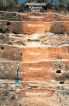
The roots of the NZ Soil Bureau lay in a soil survey conducted in 1930 by L. I. Grange and N. H. Taylor, two scientists from the Geological Survey who were asked to map soils in the "bush-sick" areas of the North Island. Their work showed clearly that this debilitating stock disease was correlated with soils formed on specific volcanic ash showers — important new information that immediately focused attention on the broader potential of systematic soil surveys. From this beginning, a Soil Survey Division was formally carved out of the Geological Survey in 1936, with Grange as its Director. Working without a permanent home — scattered across Wellington offices and district outposts — the new Division nevertheless made solid progress, completing the first regional land use surveys in Hawke's Bay and Northland, followed during the war years by rapid reconnaissance surveys of the entire country.
The Founding of Soil Bureau in 1946 and Its Subsequent Development
By 1946 the soil scientists had achieved enough to transform how land users regarded their work: soil maps had become widely accepted as an essential basis for land use planning. In that year the Soil Survey Division reorganised itself into four sections — survey, chemistry, physics, and biology — and adopted the title of Soil Bureau, marking its maturity as a multi-disciplinary scientific enterprise. A permanent home was eventually secured when an 80-hectare property was purchased at Taita in 1948, some 24 kilometres northeast of Wellington, on country representative of around four million hectares of New Zealand soils. Under N. H. Taylor's subsequent leadership, the Bureau undertook the major task of comprehensively characterising the country's main soil groups — work that eventually produced the landmark three-volume reference Soils of New Zealand in 1969, and that established the role of allophane in soils, a finding that attracted wide international attention. A new purpose-built building at Taita opened in 1962, and the Bureau went on to map all 120 of New Zealand's counties and, through its biologists, made the important 1958 discovery that the fungus Pithomyces chartarum was the cause of facial eczema in sheep and cattle.
Continue reading